Introduction
Recent events have thrust former President Donald Trump into a controversial spotlight following his AI-generated image post depicting himself as Jesus Christ. This incident, sparked accusations of blasphemy and the label of ‘Antichrist’ from some followers, highlights the complex relationship Trump has with his supporters and critics alike.
The Controversial Post
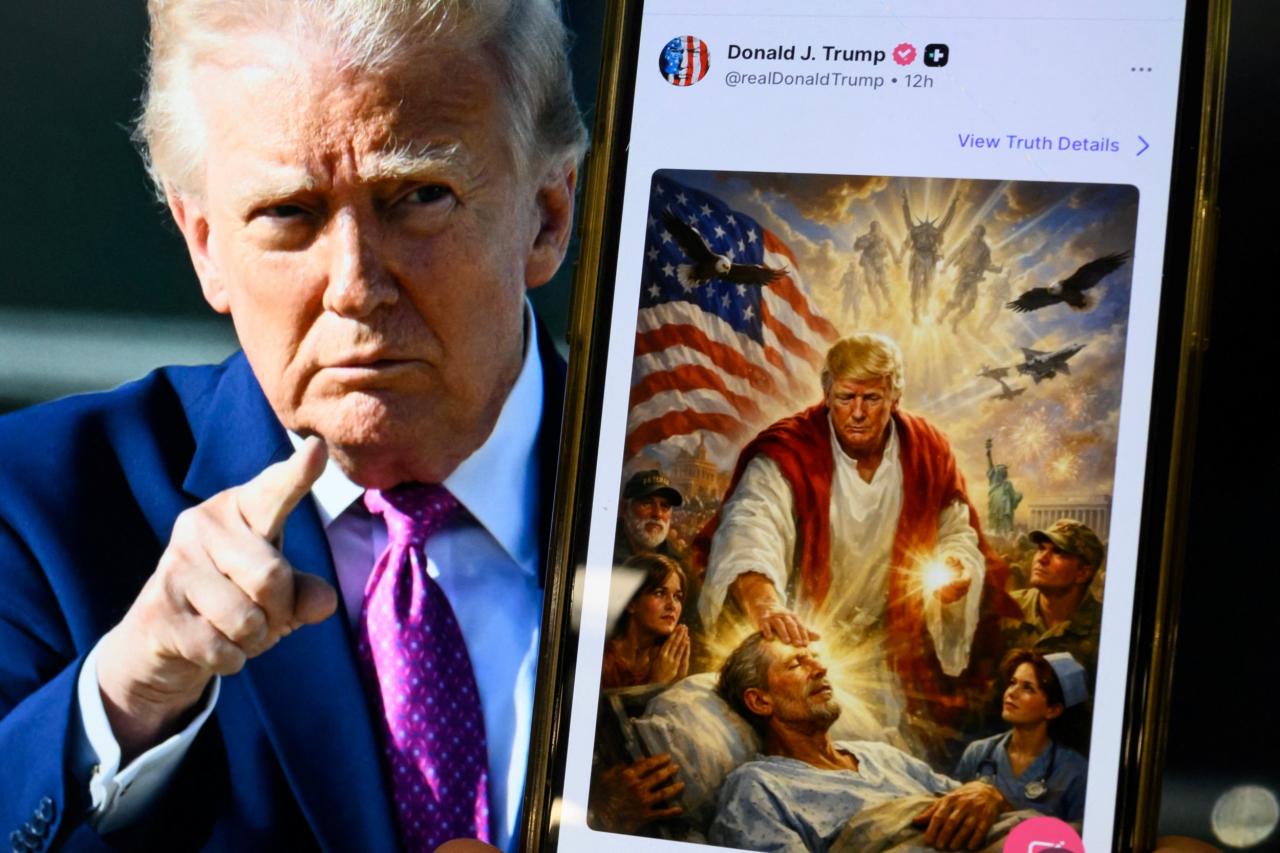
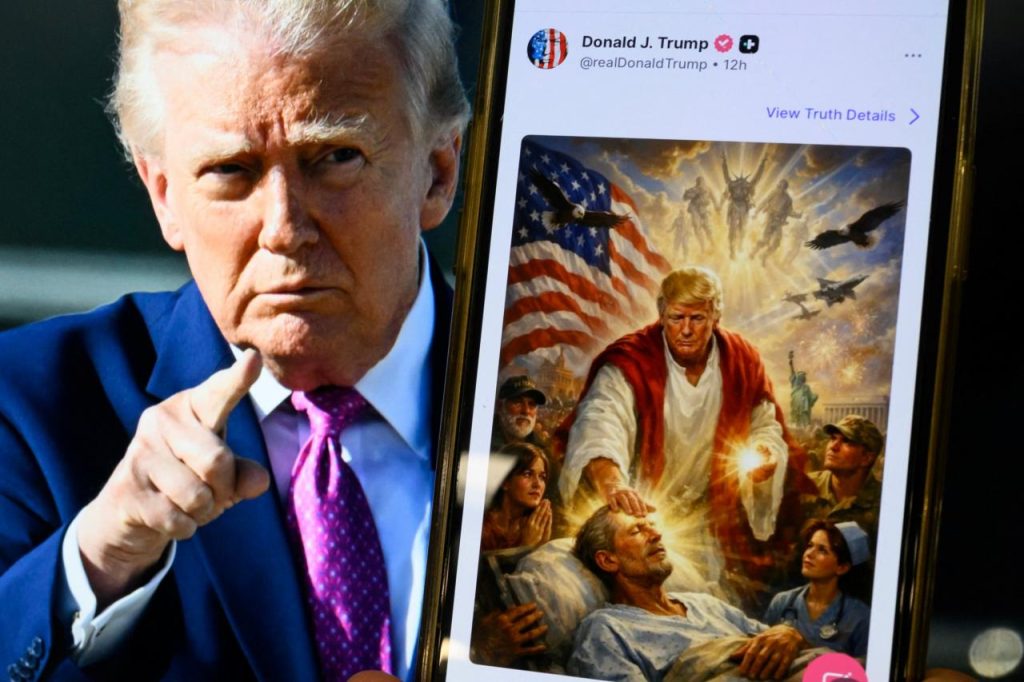
Donald Trump deleted an AI-generated image of himself resembling Jesus Christ shortly after sharing it on his Truth Social platform. The outcry from his MAGA base was swift, with supporters questioning the appropriateness of such a portrayal. The image showcased Trump dressed in red and white robes, appearing to heal a man, with the American flag draped over his shoulder. Many viewed this as an inappropriate self-depiction, leading to serious allegations against him.
Trump’s Explanation
When confronted about the image, Trump clarified, saying, ‘It wasn’t a depiction. It was me.’ He explained that he believed the image represented him as a doctor associated with the Red Cross, emphasizing his intent to convey a positive message of healing. His comments elicited further backlash as many felt his interpretation was a gross misrepresentation.
Backlash from Supporters
Post-sharing, the image garnered considerable negative attention. Followers on Truth Social labeled him as ‘the Antichrist’ and accused him of blasphemy. One notable response raised the question, ‘Are you literally depicting yourself as a savior or messiah?’ Such comments illustrate the tension within Trump’s support base regarding how he positions himself in the public arena.
The Impact of Religious Language
Trump’s use of religious imagery and language has often prompted heated discussions. His recent comments about Pope Leo XIV added fuel to the fire. He criticized the Pope’s perceived leniency towards radicalism and even questioned his leadership. This intersection of politics and religion continues to be a flashpoint for intense debates among supporters and detractors.
Global Reactions
The fallout from Trump’s statements and the AI image extended beyond American politics. Masoud Pezeshkian, the President of Iran, publicly condemned Trump’s remarks about Pope Leo. He stated, ‘the desecration of Jesus, the prophet of peace and brotherhood, is not acceptable.’ Such international reactions underscore how Trump’s words resonate globally, impacting diplomatic relations and perceptions of the United States.
The Pope’s Response
Pope Leo XIV responded to Trump’s claims, emphasizing the need for dialogue and peace rather than divisive rhetoric. He stated, ‘I don’t think that the message of the Gospel is meant to be abused in the way that some people are doing.’ This public rebuke not only highlights the Pope’s stance but also presents a stark contrast to Trump’s approach, showcasing the broader implications of their clash.
Conclusion
The controversy surrounding Trump’s AI-generated image and his subsequent statements illustrates the complex dynamics of his public persona. While Trump seeks to portray himself as a figure of healing and positivity, the backlash reveals the sensitive nature of religious symbolism in political discourse. As the debate continues, it will be essential to observe how this affects Trump’s support and his relationship with notable religious figures like Pope Leo XIV. The incident serves as a reminder of the oft-blurred lines between politics, religion, and personal branding in the modern era.