In the five days since the conflict with Iran erupted with explosions in the heart of Tehran, British Prime Minister Keir Starmer has repeatedly stressed that the United Kingdom is not seeking direct involvement in the war.
His initial stance was clear: Britain would not allow the United States to launch offensive strikes against Iran from British bases. The decision was aimed at keeping the UK outside the front lines of the rapidly escalating conflict.
However, the position softened slightly days later when the government allowed US forces to use certain British facilities for defensive operations targeting Iranian missile depots and launch sites. Even then, the prime minister emphasized that such support should not be interpreted as direct participation in the war.
Despite those efforts to limit involvement, the unpredictable nature of the conflict means circumstances could change rapidly. With Iran launching missiles and drones across multiple targets in the Middle East and Western forces increasing their presence in the region, analysts warn that the risk of escalation remains high.
There are also few signs that tensions will ease anytime soon.
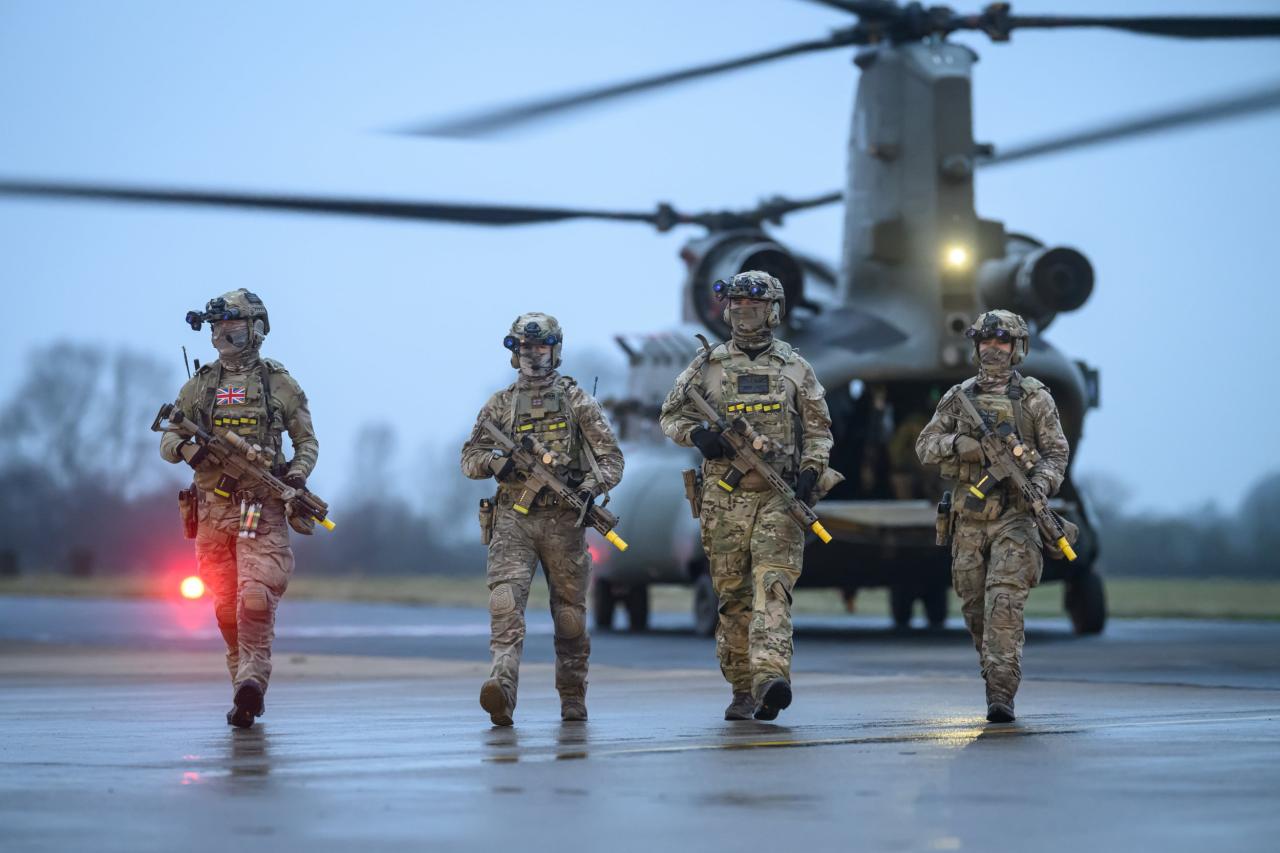
On Friday, Starmer announced that the UK would deploy four additional Typhoon fighter jets and Wildcat helicopters equipped with anti-drone capabilities to the Middle East. The move, according to the government, is intended to help protect British personnel and interests in the region.
What Could Push the UK Into the War?
Military experts say several scenarios could force Britain to move from a defensive role to direct involvement.
Dr. Patrick Bury, a former British Army captain and NATO analyst who now teaches at the University of Bath, outlined several developments that could significantly change the situation.
UK or NATO Casualties
One of the most serious risks would be casualties among British or NATO personnel.
Shortly after the conflict began, Iran launched missile and drone attacks against a US naval base in Bahrain, which hosts the headquarters of the US Navy’s Fifth Fleet. Around 300 British personnel were present at the base, and the strike reportedly landed within 200 meters of their position.
According to Dr. Bury, an incident involving British casualties could dramatically shift both public opinion and political decision-making in London.
A wider NATO response could also be triggered if attacks escalate against alliance members. For example, a missile heading toward Turkish airspace was intercepted earlier this week. If a NATO country were to suffer sustained attacks, it could potentially invoke Article 5, the alliance’s collective defense clause.
Threats to British Civilians
Another factor is the safety of British citizens across the region.
More than 140,000 British nationals have registered their presence in the Middle East with the UK Foreign Office, while thousands have already begun returning home. A large number remain in the United Arab Emirates, including Dubai, where Iranian strikes have reportedly damaged several luxury hotels.
If the situation deteriorates further and British civilians become trapped or directly threatened, the UK government could face growing pressure to intervene in order to evacuate or protect them.
Direct Attack on a British Base
Perhaps the most serious trigger would be a direct strike on a British military base.
The UK operates several strategic bases across the region, including RAF Akrotiri in Cyprus, which is frequently used for operations in the Middle East. Earlier in the conflict, a drone struck a hangar at the base, causing limited damage.
While the incident did not lead to escalation, a larger or more coordinated attack on a British facility could significantly alter the government’s position.
Dr. Bury also noted the risk that British aircraft involved in defensive operations — such as intercepting missiles or drones — could be shot down, potentially forcing the UK to respond militarily.
For now, Britain continues to emphasize its defensive role. But as the conflict spreads and tensions remain high across the region, the possibility of deeper involvement cannot be ruled out.